
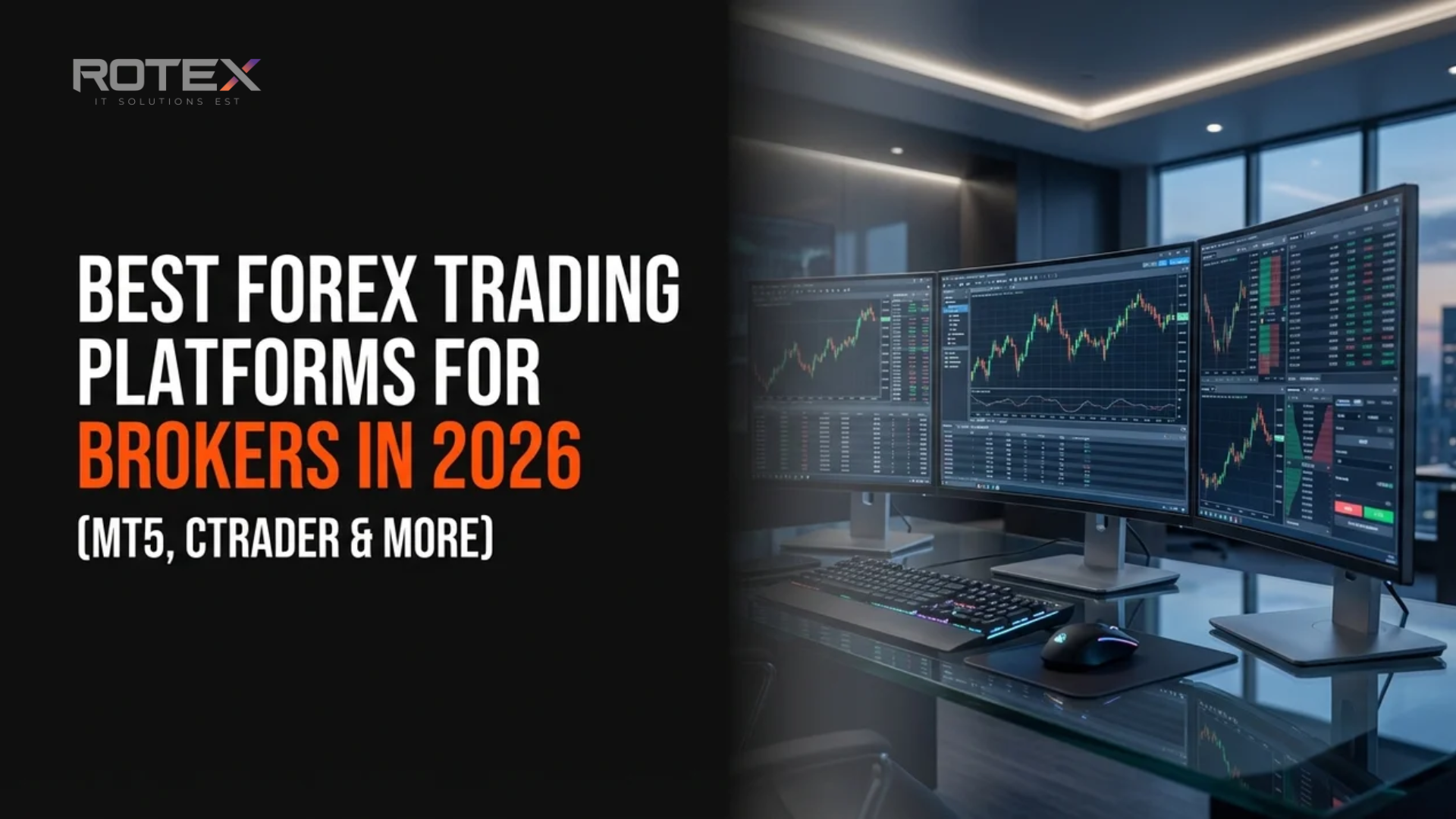
Choosing a trading platform in 2026 is not a checkbox task for forex brokers. It’s a decision that shapes how traders experience your brand every single day.
Traders don’t compare platforms on features alone anymore. They compare how fast trades execute, how smooth the interface feels, and whether the platform simply works when markets get volatile. If it doesn’t, they move on.
That’s why picking the right trading platform matters more than ever.
What Brokers Actually Need From a Trading Platform
Before looking at platform names, it helps to get clear on what brokers really need.
A good trading platform should:
Stay stable during high-volatility sessions
Execute orders without noticeable delay
Be easy for new traders but powerful enough for experienced ones
Integrate cleanly with liquidity, CRM, and back-office systems
Support future growth without constant technical fixes
If a platform struggles in any of these areas, it usually shows up later as higher churn or support issues.
MetaTrader 5 (MT5)
MT5 continues to be the most widely used platform in the forex industry, and in 2026 that hasn’t changed.
Most traders already know how to use it. That alone removes a big barrier when they open an account with a new broker.
From the broker side, MT5 offers flexibility. It supports multiple asset classes, allows automated trading, and works well with most liquidity and risk-management setups. It’s not perfect, but it’s reliable and familiar.
MT5 is often the safest option for brokers who want a proven platform without reinventing the wheel.
Best fit: brokers targeting a broad retail audience or planning multi-asset offerings.
cTrader
cTrader appeals to a different type of trader.
It’s cleaner, more modern, and built with execution transparency in mind. Traders who focus on spreads, depth of market, and order control usually prefer it over traditional platforms.
For brokers, cTrader works especially well with ECN and no-dealing-desk models. It helps position the brokerage as execution-focused rather than marketing-heavy.
That said, it may require more trader education compared to MT5, especially for beginners.
Best fit: ECN brokers and those targeting experienced or high-volume traders.
Vertex FX
Vertex FX has remained a solid choice among brokers looking for flexibility and deep customization.
It offers strong back-office integration, built-in risk management tools, and a high degree of control over dealing configurations. Brokers who prefer a platform that can be shaped closely around their internal processes often consider Vertex FX.
While it may not have the same global recognition as MT5, it continues to serve brokers who value operational control.
Best fit: brokers needing customizable workflows and integrated dealer tools.
DXtrade
DXtrade has gained attention as a modern, web-first trading platform designed for brokers seeking a sleek interface and modular architecture.
It supports multi-asset trading and allows brokers to tailor the user experience without building a platform from scratch. Its web-based nature also appeals to traders who prefer trading without heavy desktop installations.
Best fit: brokers prioritizing modern UI and web/mobile accessibility.
Match-Trader
Match-Trader has positioned itself as a broker-friendly alternative offering strong branding capabilities and a smooth user experience.
It combines trading, CRM connectivity, and client management features into a unified ecosystem. Brokers looking for a balance between customization and ease of deployment often explore Match-Trader.
Best fit: brokers seeking an all-in-one, brandable platform environment.
Custom and White-Label Trading Platforms
Not every broker wants to use the same platforms as everyone else.
White-label and customizable platforms give brokers more control over how the platform looks and behaves. Branding is stronger. Features can be adjusted based on the target market. The overall experience feels more “owned” by the broker.
Solutions from providers offering tailored trading environments — whether based on MT5, cTrader, or independent infrastructures — continue to grow in popularity.
The trade-off is familiarity. Some traders prefer platforms they already know, so adoption can take longer.
Best fit: brokers focused on brand differentiation or niche markets.
Proprietary Trading Platforms
Some brokers choose to build their own trading platforms from scratch.
This gives full control over features, user flow, and integrations. But it also comes with higher costs, ongoing maintenance, and long development cycles.
For most brokers, proprietary platforms only make sense once the business is already established and technically mature.
Best fit: large brokers with strong technical teams and long-term product roadmaps.
Integration Matters More Than the Platform Itself
One mistake brokers often make is focusing only on the front-end platform.
In reality, what happens behind the scenes matters just as much.
Your trading platform should connect smoothly with:
Liquidity providers
CRM and client management systems
Risk and exposure tools
Payment and wallet infrastructure
When these systems don’t talk to each other properly, operational issues show up fast — and traders notice.
How Brokers Should Choose in 2026
There’s no single “best” trading platform for every broker.
The right choice depends on:
Your target trader profile
Your execution model
How quickly you want to go live
How much control you want over branding and features
Many brokers now offer more than one platform to cover different trader needs. That approach often works better than forcing everyone onto a single solution.
Final Thoughts
In 2026, a trading platform is more than software. It’s the foundation of your brokerage.
MT5 remains a strong, familiar choice. cTrader offers transparency and modern design. Vertex FX provides customization depth. DXtrade and Match-Trader deliver modern, web-focused alternatives. Custom platforms give room to stand out. Each option has its place.
What matters most is choosing a platform that fits how your brokerage actually operates not just what’s popular.