

Dubai has quickly become one of the most active forex trading hubs in the Middle East. With financial zones like the Dubai International Financial Centre (DIFC) attracting global brokers and fintech companies, the trading ecosystem in the region is evolving rapidly. As competition grows, brokers are focusing more on infrastructure — especially how they source and manage liquidity.
One term that often comes up in these discussions is liquidity aggregation forex Dubai. For brokers entering the market or upgrading their trading infrastructure, understanding liquidity aggregation is essential. It directly affects pricing quality, execution speed, and the overall trading experience offered to clients.
Before selecting a liquidity provider, Dubai brokers need to understand how liquidity aggregation works and why it plays such a critical role in modern forex trading.
What Is Liquidity Aggregation in Forex?
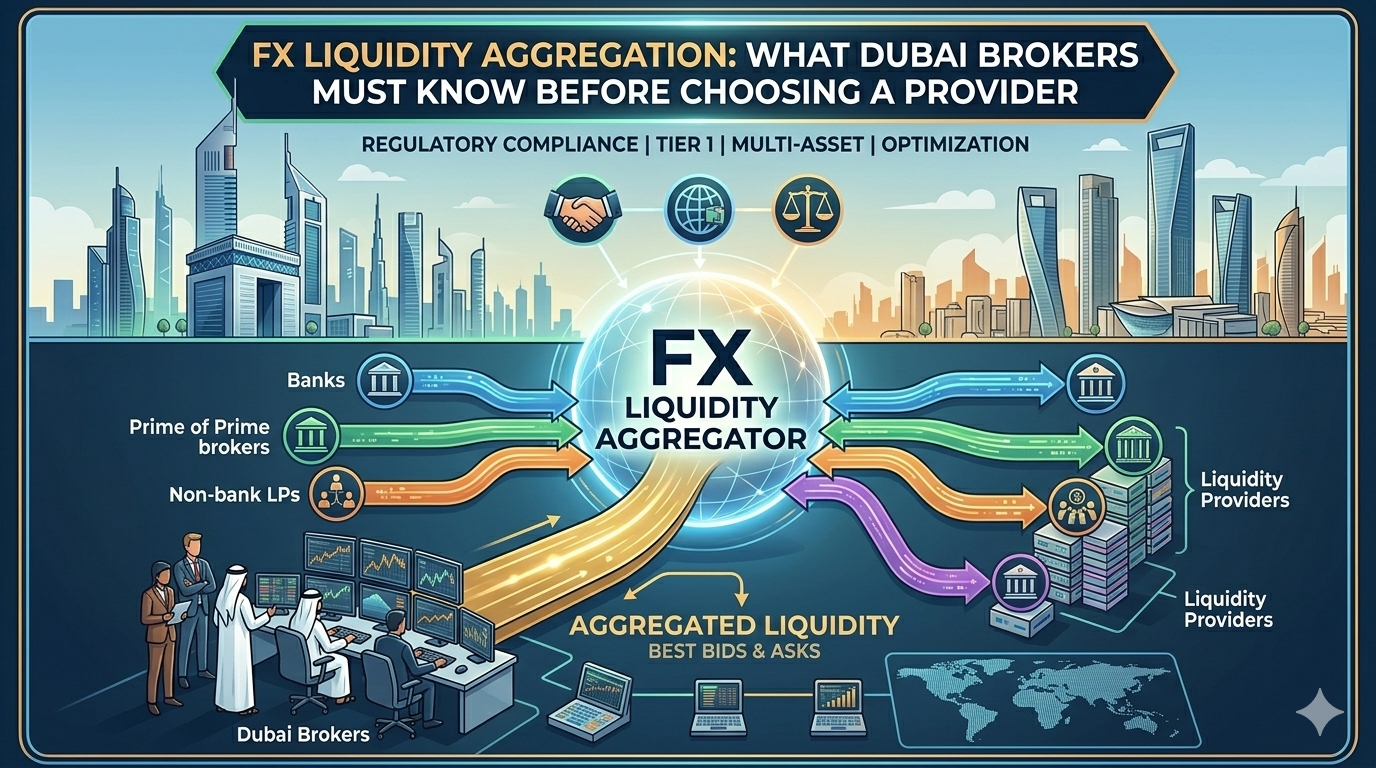
In simple terms, liquidity aggregation is the process of combining price feeds from multiple liquidity sources into a single trading stream.
Instead of relying on one bank or one market maker for pricing, brokers receive quotes from several institutions simultaneously. These may include:
- Tier-1 banks
- Institutional market makers
- Electronic communication networks (ECNs)
- Non-bank liquidity providers
A liquidity aggregation engine collects all these price feeds and automatically selects the best available bid and ask prices.
For brokers operating in Dubai, strong liquidity aggregation forex Dubai infrastructure allows them to offer tighter spreads and deeper market liquidity to traders.
This is especially important for professional traders who expect institutional-level execution conditions.
Why Liquidity Aggregation Matters for Dubai Brokers
Forex brokers in Dubai are competing in a market that attracts traders from Europe, Asia, and the Middle East. Many of these traders are experienced and expect fast execution along with competitive spreads.
Liquidity aggregation helps brokers meet these expectations in several ways.
1. Tighter Spreads
When pricing from multiple liquidity sources is combined, brokers can display the most competitive bid and ask prices available at that moment.
Instead of a single pricing source dictating spreads, the aggregated system finds the best price across the liquidity pool.
This is one of the biggest advantages of implementing liquidity aggregation forex Dubai solutions.
2. Improved Market Depth
Another key benefit is deeper liquidity.
When large orders are placed, they can be filled using liquidity from multiple providers rather than relying on a single source. This reduces the risk of slippage and improves execution quality.
For brokers targeting high-volume traders or institutional clients, market depth is extremely important.
3. Faster Trade Execution
Liquidity aggregation systems are designed to process thousands of orders per second. They automatically route trades to the liquidity provider offering the best available price.
This process happens within milliseconds.
For brokers building advanced trading platforms in Dubai, liquidity aggregation forex Dubai infrastructure ensures orders are executed efficiently even during periods of high market volatility.
Technology Behind Liquidity Aggregation
Behind the scenes, liquidity aggregation relies on advanced trading technology.
Most aggregation systems include several key components:
Liquidity Aggregator Engine
This is the core system that collects and processes price feeds from multiple providers.
Bridge Technology
Bridges connect trading platforms like MetaTrader to liquidity providers.
FIX API Connectivity
FIX protocol allows trading systems to communicate directly with liquidity sources for faster order execution.
Smart Order Routing
Orders are automatically sent to the liquidity provider offering the best price.
These technologies work together to create a seamless trading environment where pricing and execution remain stable.
A reliable liquidity aggregation forex Dubai setup ensures that brokers can maintain consistent trading conditions for clients.
Key Factors Brokers Should Consider Before Choosing a Liquidity Provider
Not all liquidity providers offer the same quality of service. Before integrating liquidity aggregation systems, brokers should evaluate several factors.
Liquidity Depth
The provider should offer deep liquidity pools across major currency pairs. Limited liquidity sources can lead to wider spreads and poor execution.
Execution Speed
Latency plays a major role in forex trading. Providers with faster infrastructure can execute orders more efficiently.
Pricing Stability
During major economic events, spreads may widen. A strong liquidity aggregation system helps maintain stable pricing by sourcing liquidity from multiple institutions.
Technology Compatibility
The provider’s infrastructure must integrate easily with the broker’s trading platform and bridge solutions.
Many brokers evaluate professional infrastructure solutions like a liquidity provider for forex brokers to access aggregated liquidity pools and reliable execution systems.
Regulatory Environment in Dubai
Dubai’s forex industry is regulated to ensure transparency and fair trading practices.
Brokers operating within the Dubai International Financial Centre are supervised by the Dubai Financial Services Authority (DFSA).
These regulations require brokers to demonstrate strong risk management systems and reliable order execution practices.
Implementing a robust liquidity aggregation forex Dubai system helps brokers comply with these regulatory expectations by providing transparent pricing and proper order routing.
The Role of Liquidity Aggregation in Institutional Trading
As the UAE attracts more institutional investors, the demand for high-quality trading infrastructure continues to grow.
Institutional traders often execute large orders and rely heavily on market depth and fast execution.
Liquidity aggregation supports these requirements by distributing orders across multiple liquidity sources.
This reduces price impact and allows large trades to be executed more efficiently.
For brokers targeting hedge funds or proprietary trading firms in Dubai, advanced liquidity aggregation forex Dubai infrastructure becomes a major competitive advantage.
Future Trends in Forex Liquidity
The forex market is evolving rapidly as technology improves.
Artificial intelligence, algorithmic trading, and high-frequency trading strategies are becoming more common. These systems depend heavily on fast execution and reliable market data.
Liquidity aggregation systems are also evolving to support these technologies by offering:
- Faster data processing
- AI-based order routing
- Multi-asset liquidity pools
- Lower latency connections
For brokers operating in Dubai, staying ahead of these technological changes will be essential.
And that starts with choosing the right liquidity aggregation forex Dubai infrastructure.
Final Thoughts
Liquidity aggregation is no longer just a technical feature in forex trading. It has become a fundamental part of a broker’s trading infrastructure.
By combining price feeds from multiple liquidity providers, brokers can offer tighter spreads, deeper market liquidity, and faster execution.
For brokers operating in one of the world’s fastest-growing financial hubs, implementing a strong liquidity aggregation forex Dubai system can significantly improve trading performance and client satisfaction.
Before choosing a liquidity provider, brokers should carefully evaluate liquidity depth, execution speed, pricing stability, and technology compatibility.
A well-designed liquidity aggregation setup not only improves trading conditions but also strengthens a broker’s position in Dubai’s increasingly competitive forex market.